Lido Key's Beach Just Got Rebuilt. The Comps Haven't Caught Up.
August 27, 2026
August 27, 2026
On the afternoon of May 26, Mayor Debbie Trice and Congressman Greg Steube stood on a stretch of Lido Beach that eighteen months earlier had all but disappeared. Hurricanes Helene and Milton had stripped away up to 90 to 100 feet of sand in places, and the city's engineers had watched the shoreline retreat toward the pavilion where the crowd now gathered to cut a ribbon. The dredge pipeline that had run sand from New Pass onto the beach for three months went quiet. Carl Shoffstall, president of the Lido Key Home Owners Association, said the thing he'd apparently been thinking the whole time: "We are looking for the next one already."
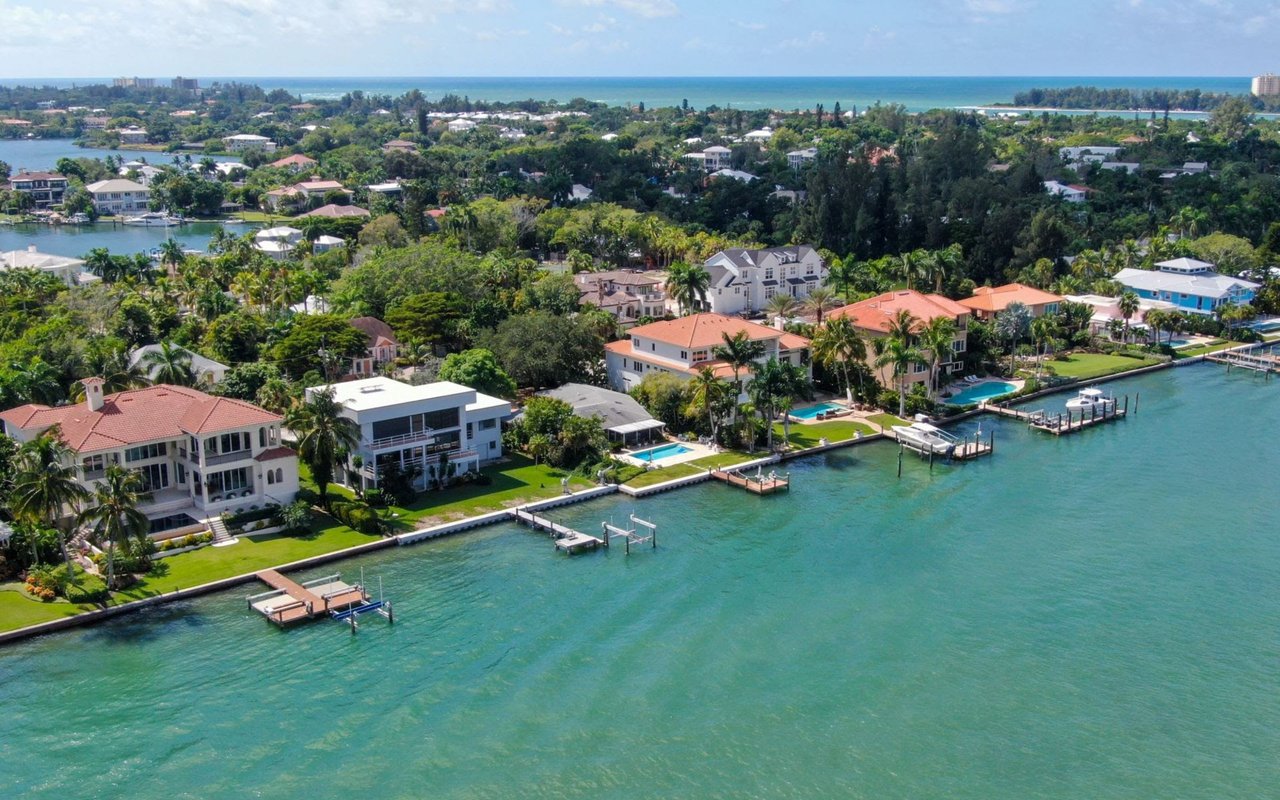
That sentence is worth sitting with if you're comparing Lido Key against Siesta Key or Longboat Key right now. The beach work is done. A taller, more engineered dune system starts construction this fall. And yet the pricing data that surfaces when you search Lido Key homes still reads like an island recovering from a storm, not one rebuilding past one. That gap between what just got fixed and what the comps still assume is the actual story here.
The project that wrapped in May restored 1.2 miles of shoreline using roughly 300,000 cubic yards of sand dredged from New Pass, funded entirely through federal disaster relief dollars routed through the U.S. Army Corps of Engineers. It's the second renourishment under a 50-year agreement between the Corps, Sarasota County, and the City of Sarasota, following a 2021 project that pulled sand from Big Pass to the south. This second round existed because that first fix didn't survive the 2024 hurricane season intact.
The dredging did double duty. New Pass, the channel separating Lido and Longboat Key, had gotten shallow enough that sailors were running aground with some regularity. Pulling sand out of the pass to widen the beach deepened the channel at the same time, a pairing the Corps says saved the city roughly $400,000 and eliminated an estimated 150 truckloads of material that would otherwise have been hauled in from elsewhere.
Beach width is the visible fix. The dune project starting this fall is the one that changes the actual math on storm protection. City Engineer Sage Kamiya's team plans to raise the dune line from the Lido Beach Pavilion south to Ted Sperling Park by two feet, to an elevation of 6.6 feet, building dune where none currently exists. According to the city's project page, that shift moves the beach's design standard from surviving a 10-year storm event to a 25-year one. Native plantings, sea oats and dune sunflowers among them, go in alongside the sand to help the new dunes hold their shape.
"Thanks to our hurricanes, the dunes got hit pretty hard," Kamiya said, describing sections of the beach that currently have no dune protection at all.
The dune work runs about $1.2 million, with another $840,000 set aside to replace three beach walkovers damaged in the storms. Construction is expected to continue into 2027, timed around sea turtle and shorebird nesting seasons the same way the sand project was.
| Phase | Status | Detail |
|---|---|---|
| Beach renourishment | Complete, May 26, 2026 | 1.2 miles restored, ~300,000 cubic yards, $12M federal funding |
| New Pass channel dredging | Complete alongside renourishment | Deepened and widened for boater safety |
| Dune construction | Starts fall 2026 | Raises dunes 2 ft to 6.6 ft elevation, moves protection from 10-year to 25-year storm standard |
| Beach walkover replacement | Starts fall 2026 | Three walkovers rebuilt, roughly $840K |
None of that shows up yet in the numbers a buyer sees on a search. One closely watched home value index put the typical Lido Key home value at $909,109 as of the end of June 2026, down 8.9 percent over the prior year. Separate market data pulled from the local MLS put average time on market somewhere between four and four and a half months for the twelve months ending in mid-2026, with list-to-sale ratios sitting around 92 percent.
Here's where an average misleads more than it informs. Lido Key isn't one market. It's a barrier island with beachfront estates listing well into eight figures sitting a few blocks from condos still priced in the $300,000s. When a handful of high-dollar single-family sales close in a given month, they pull the average sale price toward $2 million. When they don't, the same average swings the other direction. A February 2026 market snapshot put the median list price closer to $1.2 million, down 12 percent per square foot from a year earlier, which tracks nearer to what a typical buyer actually competes for than a blended average does.
The softening itself isn't a mystery. Two hurricane seasons in a row rattled buyer confidence on every barrier island in the region, and Lido Key, sitting between Longboat Key to the north and Siesta Key to the south, wasn't spared. What's less obvious is that the softening priced in a level of ongoing storm risk that the island is actively engineering its way out of, on a federally funded, publicly documented timeline. The comps are backward looking by definition. The dune project isn't finished yet, so it can't show up in a sold price.
Lido Key sits inside the City of Sarasota, which carries a Community Rating System Class 5 designation from FEMA, a rating only a small number of the more than 1,500 participating communities nationwide beat. That status translates to a 25 percent discount on National Flood Insurance Program premiums for properties in Special Flood Hazard Areas, the AE and VE zones that cover most of the island's waterfront.
That discount attaches to the community, not the individual house, so it's already built into current premiums. What isn't automatic is whether a given policy reflects it correctly, or whether the elevation certificate on file for a specific property is current enough to price the home accurately under FEMA's Risk Rating 2.0 approach, which prices flood risk property by property rather than by zone. Two AE-zoned homes a block apart can carry very different premiums depending on first-floor height and how recent that certificate is. If you're evaluating a Lido Key listing, ask for that document before you ask about the kitchen.
Buyers waiting for resale prices to reflect the new infrastructure might notice that developers aren't waiting. Rosewood Residences, a 65-unit hotel-branded condominium going up on the site of the former Coquina and Gulf Beach Resorts, was under active construction this spring with occupancy targeted for this summer. Separately, the city has approved a 304-room resort rebuild on the site of the old Sandcastle, which closed after storm damage in 2024 and was later demolished, though no construction start date has been set yet.
That's real money committing to Lido Key's next decade at the same moment the resale market is still discounting its last two years. Institutional buyers underwriting a hotel don't move on sentiment. They move on engineering timelines and federal funding commitments, the same ones driving the beach and dune work.
Will the dune construction close the beach this fall? Some sections will likely see temporary access changes similar to the renourishment project, with marked crossings between construction zones. Most of the beach, including the pavilion, concessions, and parking areas, is expected to stay open.
Does the completed renourishment change my flood zone or insurance immediately? Not directly. Flood zone maps are set by FEMA and updated on their own schedule, separate from renourishment projects. The CRS discount is a community-level status tied to floodplain management activities rather than a direct result of the sand project, though both reflect the same push toward risk reduction.
Is now actually a good time to buy on Lido Key? That depends on your timeline and risk tolerance more than any single number. What's true is that the island's physical protection is improving on a documented schedule while pricing still reflects the years before that work started. Anyone weighing that gap should talk it through with someone who knows which blocks sit inside the new dune segment and which don't.
Lido Key's beach is wider than it's been in years, and by 2027 its dunes will be too. The homes sitting behind that work haven't finished catching up on paper. If you want to look at specific listings against the actual construction map instead of a blended average, Monica DeSomma can walk you through what's happening block by block. Let's Connect.
Stay up to date on the latest real estate trends.
I am committed to guiding you every step of the way—whether you're buying a home, selling a property, or securing a mortgage. Whatever your needs, I've got you covered.