On Anna Maria Island, the City Line Sets What a Bedroom Earns
October 15, 2026
October 15, 2026
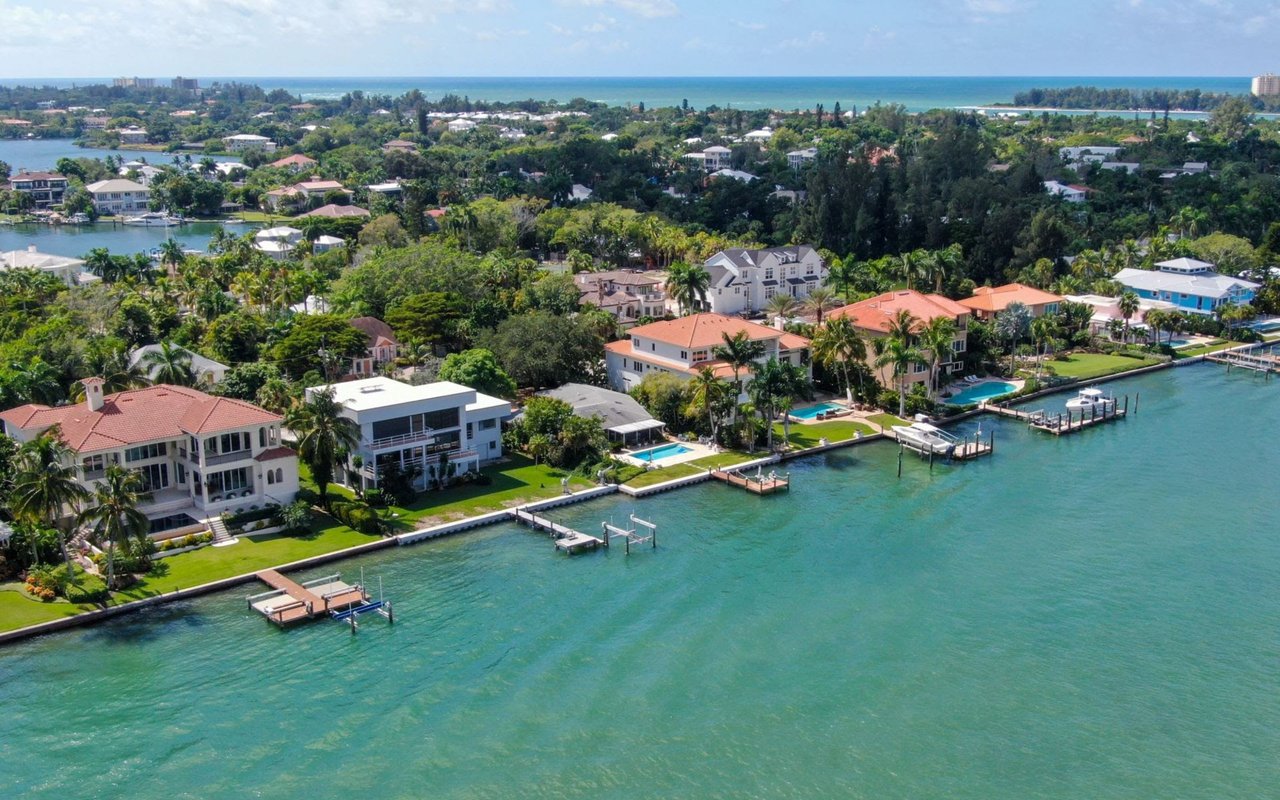
Take one five-bedroom elevated home, the kind going up across Anna Maria Island since the 2024 hurricanes, and set it down on three different lots. In the City of Anna Maria, its vacation rental license allows eight overnight guests. In Holmes Beach, the same floor plan is allowed ten. In Bradenton Beach, under the ordinance the commission moved forward this September, it would be allowed twelve. Nothing about the house changes except the municipal boundary, and the gap between the three numbers runs through every rental projection a buyer builds.
Portal listings show bedrooms, square footage and price. They don't show the guest count the city will print on the license. On this island, that number decides what each extra bedroom is worth to a rental buyer.
Anna Maria Island is split among three cities, and each sets its own overnight occupancy limit for short-term rentals.
The City of Anna Maria allows two guests per bedroom plus two more, with a cap of eight for rentals with three or more bedrooms, according to AMI Sun reporting from July 2026. Holmes Beach allows six guests or two per bedroom, whichever is greater, and its ordinance gives the code enforcement officer the job of setting the bedroom count. Bradenton Beach's amended rule uses two per bedroom plus two with no fixed ceiling.
Here is how those formulas apply to the same bedroom counts:
| Bedrooms | City of Anna Maria | Holmes Beach | Bradenton Beach, as proposed |
|---|---|---|---|
| 2 | 6 | 6 | 6 |
| 3 | 8 | 6 | 8 |
| 4 | 8 | 8 | 10 |
| 5 | 8 | 10 | 12 |
| 6 | 8 | 12 | 14 |
The table carries the main point of this post. In Anna Maria, once a home reaches three bedrooms, each added bedroom adds nothing to the licensed guest count. In Holmes Beach, every bedroom past the third adds two guests. In Bradenton Beach, every bedroom adds two.
A quick read of the table might suggest Holmes Beach always comes out ahead. It doesn't. At three bedrooms, Holmes Beach's two-per-bedroom formula gives six guests, the same as its floor, while Anna Maria's formula gives eight. A three-bedroom cottage in Anna Maria is licensed for two more guests than the same cottage a few blocks south in Holmes Beach.
The two cities tie at four bedrooms. After that, Holmes Beach pulls ahead, and the gap grows with every bedroom. A buyer comparing a three-bedroom home in Anna Maria with a five-bedroom home in Holmes Beach is comparing eight guests with ten, even though the second house has two more bedrooms to furnish, clean and insure.
That flip matters for which homes make sense where. A buyer who wants a large rental home gets the most guests per bedroom outside the City of Anna Maria. In Anna Maria, the licensing math favors the three-bedroom layout, and the fourth and fifth bedrooms work as space for the owner's family or for guest comfort rather than as added capacity.
This would be a minor quirk if the island's housing stock were standing still. It isn't. Holmes Beach Development Services Director Chad Minor told a July 2026 stakeholder meeting that the city has issued roughly 5,000 building permits since the 2024 hurricanes. In Anna Maria, a repair estimate at or above 50% of a building's pre-damage value, land excluded, counts as substantial damage, and the structure then has to meet current floodplain and building code requirements. In practice, that pushes many damaged ground-level homes toward full replacement.
Some older rental properties are leaving the market altogether. The nine-unit Anna Maria Motel at 808 North Bay Blvd. was demolished in July 2025 after storm flooding, and the site was to be sold as four vacant lots, the AMI Sun reported. During Anna Maria's July 2026 budget debate, Commissioner Charlie Salem tied rising property tax revenue partly to the new homes that replaced hurricane-damaged homes.
The Sun ran a photo caption with a Bradenton Beach rental story this summer saying that newer vacation rental homes can generally accommodate more guests. In Holmes Beach and Bradenton Beach, a rebuild with more bedrooms can translate into more licensed guests. In Anna Maria, a rebuild past three bedrooms runs into the eight-guest cap, so the cost of adding bedrooms rises while the licensed guest count stays flat.
This is the friction that tends to surface only after a contract is signed.
Anna Maria's vacation rental code, as published in Ordinance 15-807, states that rental licenses are non-transferable and that an outstanding license becomes null and void when the property is sold or otherwise transferred. A buyer therefore registers the property again, and the guest count on the new license is the one the city approves.
Anna Maria's history makes this more than a formality. When the city adopted its vacation rental ordinance in November 2015, owners filed Bert Harris Act claims, and about 100 two-plus-two exceptions were granted in 2016 to resolve them. The city's 2025–26 fee schedule listed registration fees for rentals approved for as many as 29 occupants. So some Anna Maria homes carry occupancy approvals well above the eight-guest cap. The city's current renewal paperwork includes occupancy and Bert Harris verification on its office checklist. Our research did not find published guidance on whether one of those exceptions carries to a new owner. A buyer looking at a six-bedroom Anna Maria listing advertised for 14 guests is looking at a question to settle with the city before closing, and a listing description doesn't answer it.
Holmes Beach handles a sale differently. Its rental certificate may transfer with a sale, as long as the owner notifies the city of the new owner, manager or agent within 15 business days and the new owner meets the ordinance's conditions. The city's vacation rental certificate page lists a $780 initial application that includes inspections, a $780 renewal every two years, and a $50 fee to change the authorized agent.
Anna Maria charges its registration fee per allowed occupant, so the licensed guest count drives the fee as well as the rental income. During the city's July 2026 budget workshops, City Treasurer Randy Maxson proposed raising the annual fee from $100.20 to $165 per allowed occupant, to be adopted later by a separate resolution. At $165, a three-bedroom rental licensed for eight guests would pay $1,320 a year. Maxson estimated the increase would raise $950,000 and proposed setting aside $100,000 in case the fee is challenged in court, the AMI Sun reported. Our research did not find confirmation that the $165 rate was adopted, so treat it as the July proposal rather than the current fee.
Enforcement is also changing. Code Enforcement Manager Tom Collins told commissioners the city had 903 active vacation rentals as of the July 30, 2026 workshop. He said his department took over rental inspections earlier this year instead of contracting them out, and that unregistered rentals could result in fines of $250 per day. In February 2025, by comparison, the city reported 759 registered units.
Holmes Beach had about 1,600 registered units as of July 2026, up from 245 when its program launched in 2016. The city uses Rentalscape software, which scans more than 10,000 vacation rental websites a day to flag properties that are unregistered or out of compliance. In both cities, the guest count a listing advertises is checked against the licensed number.
Bradenton Beach's current rules tie occupancy to the certificate of occupancy or the state DBPR license, whichever is lower. City Attorney Erica Augello called that section "very convoluted" at the July 21 work meeting and noted that DBPR licenses do not set occupancy limits. Commissioners favored the two-plus-two formula over a fixed cap. Commissioner Scott Bear said a 12-guest cap would limit what owners of large homes could rent.
The rental ordinance, numbered 26-570 on the agenda, had its first reading on Sept. 3, 2026. The second and final reading was scheduled for Sept. 17. The amended rule would also cap visitors at twice the licensed occupancy and make one-year licenses the standard. As of this writing, we have not seen published confirmation of the final vote, the effective date, or how the rule treats existing licensed rentals. The Bradenton Beach column in the table reflects the proposal, not settled law.
State law sets the outer limits. Under the 2025 Florida Statutes, section 509.032, regulation of public lodging is generally preempted to the state, and local laws may not prohibit vacation rentals or regulate how long or how often they are rented, unless the local measure was adopted on or before June 1, 2011. On occupancy specifically, Augello told the Bradenton Beach commission that similar occupancy-limit cases have been litigated in other cities and that the challengers lost, while acknowledging the city could still be sued.
Does a state DBPR license set how many guests a home can sleep? No. Augello noted at the July 2026 Bradenton Beach meeting that DBPR licenses do not establish occupancy limits. The local license does.
Are there costs beyond the city registration? Yes. At the Holmes Beach meeting in July 2026, a Manatee County Property Appraiser representative said any property rented at any point during the year must be reported on Form DR-405 by April 1. Manatee County also applies a 6% tourist development tax to rentals of six months or less. These are informational points; for how they apply to a specific property, check with a tax professional.
If you're weighing a rental property on Anna Maria Island, start with the guest count the city will license after closing, then check whether the price makes sense. Monica DeSomma can help you compare properties across Anna Maria, Holmes Beach and Bradenton Beach, and line up the city-level questions while you're still under contract. Let's Connect.
This article is general information, not legal, tax or financial advice. Consult a qualified professional about your situation.
Stay up to date on the latest real estate trends.

I am committed to guiding you every step of the way—whether you're buying a home, selling a property, or securing a mortgage. Whatever your needs, I've got you covered.